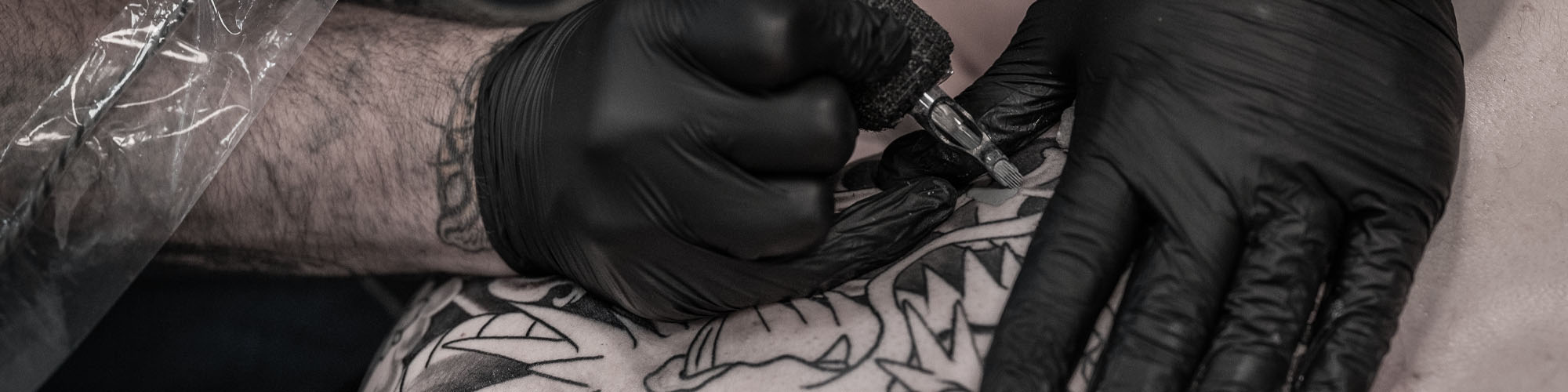
There’s a tattoo on your body that you don’t look at anymore.
Maybe it’s hidden under your sleeve, or covered by a strategically chosen outfit. Maybe you’ve learned to ignore it so completely that you forget it’s there. Until you catch a glimpse in the mirror, or someone asks about it, and that familiar weight settles in your chest.
I know this feeling. Not because I have regrettable ink (though after 20+ years in this industry, I’ve certainly made my share of artistic missteps), but because I’ve sat across from hundreds of people in this exact same situation. I’ve heard stories. I’ve seen the frustration, the resignation, the “sad face”.
And I’ve spent much of my career proving that these stories don’t have to end with regret.
The Tattoo That Started Everything
My journey into tattoo restoration started, as most meaningful things do, with someone else’s pain.
A woman in her mid-30s walked into our shop. She had a name tattooed across her collarbone. Bold, black script. The kind of loving gesture that feels like forever when you’re young and in love.
Older and wiser now. The relationship had ended badly a long time agor. And every single day for ten years, she’d woken up with her ex-boyfriend’s name as the first thing she saw in the mirror.
“Can you fix this?” she asked. “Everyone says you can’t cover black ink.”
I studied the tattoo for a long moment. The placement was challenging. The ink was dense. The lettering was large. By conventional wisdom, this was a laser removal situation and that can mean months of painful sessions, thousands of dollars, and even then, no guarantee of complete removal.
I saw a woman who’d been carrying this for a third of her life. I saw someone who deserved to look in the mirror without flinching.
“I can fix this,” I told her. “It won’t be easy, but I can absolutely fix this.”
Two sessions later, she had a beautiful mandala design where that name used to be. I’ll never forget the way she looked at herself in the mirror after we finished. She touched the new tattoo gently, then looked up at me with tears in her eyes.
“I can finally breathe,” she said.
That’s when I understood: I wasn’t just covering tattoos. I was restoring people’s relationship with their own skin.
What Makes a Tattoo Worth Restoring?
Over the years, I’ve worked on thousands of tattoos. Faded sleeves from the ’90s. Blown-out tribal pieces. Names of people long gone from our lives. Bad decisions made in good faith. Good decisions that time and sun have weathered beyond recognition.
And the question I’m asked most often is: “Is my tattoo worth fixing, or should I just get it removed?”
Here’s what I’ve learned: If a tattoo occupies space in your mind, it’s worth addressing.
It doesn’t matter if it’s “objectively” bad or just personally meaningful in a way that no longer serves you. It doesn’t matter if other people think it’s fine. What matters is how you feel when you see it.
The Tattoos I See Most Often for Restoration
- Faded Memories – Tattoos from 10, 15, 20 years ago that have lost their vibrancy. The black has turned grey. The colors have dulled. What was once a bold statement is now a whisper of its former self. These tattoos don’t need to be covered, they need to be brought back to life.
- Love That Changed – Names, dates, symbols of relationships that have ended. These are the most emotionally loaded tattoos I work with. There’s often shame around them, as if getting someone’s name was naive or foolish. But love isn’t foolish. It just sometimes changes. And your skin doesn’t have to carry that story forever.
- Youthful Choices – Tattoos that made perfect sense at 18 or 21 but feel disconnected from who you’ve become. The tribal armband. Band logo. The lower back design. The flash art chosen off a wall. These tattoos aren’t “bad”, they’re just from a different chapter of your life.
- Good Ideas, Poor Execution – Perhaps the most heartbreaking category. You had a vision. You trusted an artist. And what you got didn’t match what you imagined. Bad line work, poor proportions, colors that don’t sit right. You wanted art; you got a reminder of disappointment.
- Time and Sun Damage – Even the best tattoos fade. UV exposure, aging skin, the natural process of ink settling into your body over decades. Sometimes a tattoo just needs refreshing, bringing back the depth and vibrancy it’s lost to time.
Can Your Tattoo Actually Be Fixed? (The Honest Answer)
I’m going to be straight with you, because honesty is the foundation of this work: I can successfully restore or cover approximately 95% of the tattoos people bring to me.
That remaining 5%? They’re usually cases where laser pre-treatment would dramatically improve the outcome, or where the client’s expectations don’t align with what’s physically possible. But even then, we can usually find a solution.
What Makes a Tattoo Fixable?
Age Works in Your Favor
Counterintuitively, older tattoos are often easier to work with. Ink fades over time. What was solid black 15 years ago has naturally lightened to grey. This gives us more design flexibility. That name you got in 2005? It’s probably 30-40% lighter now than when it was fresh. That’s a gift for restoration work. Work that is 6 years or older seems to be a good benchmark for when, in many cases, a tattoo becomes quite easier to cover.
Size Matters (And We’ll Need to Go Bigger)
The cardinal rule of cover-ups: the new tattoo will almost always be larger than the old one. Sometimes not much larger at all, and other times, it may need to be quite a bit bigger. We need that extra space to strategically incorporate the old ink into the new design, using it as shadow, depth, or background.
Placement Gives Us Options
Some body areas are more forgiving than others. Forearms, upper arms, thighs, and backs. These areas have more space to work with and skin that holds ink well. Fingers, feet, and areas with significant scarring can be trickier, but not impossible.
Your Skin Tells the Story
Healthy skin holds new ink beautifully. Scarred or damaged skin requires more careful planning. If your old tattoo was done poorly or has been picked at over the years, we may need multiple sessions or a more strategic approach. But again, not impossible. Just more thoughtful.
The Tattoos That Need Special Consideration
Solid Black Coverage
“Can you cover a black tattoo?” This is the question I’ve answered a thousand times, and the answer is always: yes, with the right approach.
Covering black with black is absolutely possible. We go darker and use strategic design to break up the visual mass. Or we can incorporate the black as intentional shadowing within a larger piece. Traditional Japanese work, neo-traditional designs, and bold American traditional styles are all excellent for covering black ink.
What won’t work? Light, delicate designs with pastels or white ink. We’re working with the laws of pigment here. Dark covers light, not the other way around.
Fresh Tattoos
If you just got a bad tattoo, I need you to wait. Your skin needs somewhere in the range of 30 days to 3 months to fully heal before we can cover it. I know that feels like forever when you’re looking at something you hate, but trying to work on healing or freshly healed skin creates complications that can make the final result worse.
Use this time to think about what you want instead. Research designs. Save images that speak to you. Come to your consultation with ideas, even if they’re rough. This waiting period isn’t wasted time—it’s preparation.
Scarred or Raised Tattoos
Tattoos that sit raised on your skin (usually from heavy-handed work or allergic reactions) need special attention. The scar tissue won’t hold ink the same way healthy skin does. This doesn’t mean we can’t work with it, but it means we need realistic expectations about texture and how the new tattoo will settle.
The Art of Transformation: How I Approach Every Cover-Up
When you come to me with a tattoo you want fixed, here’s what happens:
Step 1: The Consultation (Always Free, Always Honest)
This is where we sit down and really talk. Not just about your tattoo, but about why it bothers you. What would make you happy? What do you envision when you imagine looking at this area of your body without that weight?
I’ll photograph your existing tattoo from multiple angles. I’ll assess the ink density, the placement, the size. I’ll ask about your timeline and budget. And then I’ll tell you the truth about what’s possible.
Sometimes people come in expecting I’ll say something isn’t fixable. They’ve been told by other artists that it can’t be done, or that they need to spend thousands on laser removal first. And I get to tell them: no, we can work with this. We can absolutely create something beautiful here.
That moment when someone realizes they’re not stuck with their regret, never gets old.
Step 2: Design Strategy (Where the Magic Happens)
This is my favorite part. This is where we take your old tattoo and figure out how to make it disappear while creating something you’ll actually want to show people.
Using What’s Already There
A skilled cover-up isn’t about ignoring the old tattoo. Is about incorporating it so cleverly that no one would ever know it’s there. That dark patch of old ink? It becomes the shadow under a rose petal. That heavy line work? It becomes the bold outline of a new design. That faded tribal? It becomes the subtle texture within a larger geometric piece.
I’m not covering your old tattoo. I’m reimagining it.
Playing with Perception
The human eye is drawn to certain things: bold lines, bright colors, contrast, depth. When I design a cover-up, I’m intentionally directing your eye away from where the old tattoo was and toward the new focal points. By the time I’m done, your brain doesn’t even register that something used to be there.
It’s part art, part psychology, part optical illusion.
Designing for Your Body
Your body isn’t a flat canvas. It moves, it curves, it has its own topography. A good cover-up works with your body’s natural lines and movement. I’m not just putting a new tattoo over an old one. I’m creating something that flows with how you move and how you live.
Step 3: The Actual Work (Where Trust Meets Craft)
When we finally get to the tattoo session, you’re sitting in my chair with a stencil on your skin and we’re about to do something that feels both monumental and intimate: we’re changing your relationship with your own body.
Taking Our Time
Cover-ups can’t be rushed. Depending on the size and complexity, we might need one session or we might need three. A small name tattoo might take 2-3 hours. A full sleeve restoration might be 15-20 hours spread across multiple sessions.
I’ve learned that the clients who are happiest are the ones who understand this from the beginning. We’re not slapping a band-aid over your regret. We’re carefully, methodically creating something that will make you forget the original tattoo ever existed.
Managing Expectations About Sensation
I won’t lie to you: cover-ups can be more uncomfortable than getting a fresh tattoo on clean skin. We’re working over scar tissue and old ink, and your body remembers. But we take breaks. We go at your pace. And I’ve never had someone tell me the discomfort wasn’t worth the result.
Building as We Go
Sometimes the design evolves as we work. I see how the ink is taking, how your skin is responding, and I make micro-adjustments to ensure the final result is exactly what we envisioned—or better.
This is the difference between a good tattoo artist and a great cover-up specialist: I’m not following a template. I’m responding to your unique skin, your unique old tattoo, your unique needs.
Step 4: The Healing Process (More Important Than You Think)
The work doesn’t end when you leave my chair. How your tattoo heals will determine how it looks for the rest of your life.
The Critical First Week
Keep it clean. Keep it moisturized. Don’t pick at it (I know it itches—don’t pick at it). Avoid sun exposure. Follow the aftercare instructions exactly. This isn’t negotiable if you want optimal results.
The Settling Period
It takes 4-6 weeks for a tattoo to fully heal and settle into your skin. During this time, it’s going to look a little rough. Colors will be bright. Edges might look harsh. The skin might be slightly raised.
This is all normal.
Don’t judge your tattoo during this phase. Let it heal. Trust the process.
The Touch-Up
Sometimes after healing, we need to do a small touch-up session. Maybe a color didn’t take quite right. Maybe an edge needs reinforcing. This is included in my cover-up work because I want you to be absolutely thrilled with the final result.
Step 5: The Reveal (Why I Do This Work)
Six weeks after we finish, you come back for your final check-in. The tattoo is fully healed now. The colors have settled. The skin is smooth.
And this is when people truly see it for the first time.
The old tattoo is gone. Not hidden, not covered up in a way that screams “this is hiding something.” Just… gone. Replaced by something beautiful that feels like it was always meant to be there.
I’ve had clients cry. I’ve had clients laugh with relief. I’ve had clients just stare at themselves in the mirror, touching the new work like they can’t believe it’s real.
And every single time, I’m reminded why I love this work.
Real Stories: The Transformations That Keep Me Going
Names changed for privacy, but stories are real
Sarah: The Twenty-Year Burden
Sarah came to me with a lower back tattoo from 1999. It wasn’t poorly done. It was just very much of its time. The kind of design that screamed “late ’90s” and had become the subject of jokes and judgment.
She was 42, a successful attorney, and every time she wore certain dresses or swimsuits, she felt people’s eyes on that tattoo. She felt judged. She felt like she was still being defined by a choice she made at 22.
We covered it with a beautiful cherry-blossom branch that incorporated her birthstone colors. The old tattoo became the shading within the new design. When we finished, she stood looking at her back in the mirror for a full five minutes without speaking.
“I can wear what I want now,” she finally said. “I’d forgotten what that felt like.”
Marcus: Covering the Uncoverable
Marcus had his wife’s name in 4-inch tall Old English script across his chest. The marriage had been over for eight years. He’d tried to have it removed with laser. Six painful sessions that barely lightened it and cost him a lot of pain, time and money.
“Everyone says you can’t cover black text this big,” he told me. I studied it for a long time. He wasn’t wrong, it was challenging. But I saw a way.
We designed a large traditional eagle with spread wings. The old lettering became the deep shadow and feather detail within the eagle’s body. It took three sessions over four months. But when we finished, you would never, ever know there was text underneath.
Elena: Restoring What Time Took
Elena didn’t want a cover-up, she wanted a restoration. She had a full sleeve done in 1995 that had been absolutely stunning. But 25 years of sun exposure, aging, and the natural fading of ink had left it looking grey and muddy.
She didn’t want to change it. She just wanted it to look like it did when it was fresh.
This is some of my favorite work, bringing vibrancy back to tattoos that have earned their age. We spent six sessions carefully going over every inch of that sleeve, refreshing colors, reinforcing lines, adding depth where time had flattened it.
When we finished, she was looking at the arm she remembered. The arm she’d loved. Just restored.
“It’s like seeing an old photograph get cleaned up and digitized,” she said. “It was always beautiful. Now everyone else can see it again too.”
David: The Mistake That Wasn’t
David came in angry at himself more than anyone. He’d gotten drunk at 24 and let a friend who “knew how to tattoo” work on him. The resulting piece on his shoulder was… rough. Shaky lines, inconsistent depth, no real design cohesion.
He’d been hiding it for twelve years. He’d turned down dates, avoided pools, wore long sleeves even in summer.
“I was so stupid,” he kept saying during consultation.
These types of issues are far more common than anyone thinks, as the first generation that had access to Amazon shipped tattoo machines, comes of age.
We covered it with a powerful geometric design that incorporated elements of his Japanese heritage.
“I didn’t realize how much mental space this was taking up,” he said. “Like… I can stop thinking about it now. Finally.”
What Makes Me Different (And Why People Travel to See Me)
I’m going to be honest with you: I’m not the cheapest cover-up artist in the world. I’m probably not even in the top five cheapest.
But I am exceptionally good at this specific work, and people know it.
Two Decades of Specialization
I’ve been doing cover-ups and restorations as my primary focus since 2004. While other artists were building their careers on custom flash or portrait work, I was becoming obsessed with the unique challenges of transformation work.
Twenty years of focused practice means I’ve seen nearly every type of cover-up situation imaginable. That weird tribal with the blown-out edges? Done it dozens of times. The name in perfect script that seems impossible to conceal? I’ve covered hundreds. The sleeve that’s faded to grey? I’ve restored countless.
This specialization matters. A general practice doctor can treat your condition, but you go to a specialist for better outcomes. Same principle.
The Technical Skills That Matter
Cover-up work requires specific technical abilities:
Understanding Color Theory – Knowing which colors will properly neutralize or hide the tones in your old tattoo. This isn’t guesswork; it’s applied color science.
Strategic Design – Creating designs that use the old tattoo’s placement and density to their advantage rather than fighting against it.
Skin Reading – Understanding how different skin types, ages, and conditions will hold new ink, especially over scar tissue or old work.
Patience – Rushing a cover-up is how you end up with a bad cover-up. I take the time to do it right, even if that means multiple sessions when a less careful artist might try to do it in one.
The Empathy That Matters More
But here’s what really makes this work special: I understand that you’re not just asking me to cover a tattoo.
You’re asking me to help you reclaim a part of yourself.
That name on your skin isn’t just ink, it’s a reminder of heartbreak. That faded sleeve isn’t just aged art, it’s a connection to who you used to be that you’re not sure you want anymore. That bad tattoo isn’t just poor craftsmanship, it’s years of avoiding mirrors and making excuses.
I take that seriously.
Every consultation, I’m not just looking at your skin. I’m listening to your story. I’m understanding what this means to you. Because the technical work is only half of the transformation. The other half is creating something that genuinely reflects who you are now.
The Question The Everyone Wonders
(but doesn't always ask)
“Why should I fix this tattoo instead of just learning to live with it?”
I hear this question in different forms all the time. Sometimes it’s direct. Sometimes it’s implied in the way someone speaks about their tattoo, with resignation, like this is just their burden to carry.
And here’s what I want you to understand:
You don’t have to live with something that brings you discomfort every single day.
Think about how often you see this tattoo. When you get dressed. When you shower. When you catch your reflection unexpectedly. When someone asks about it, you have to decide whether to tell the truth or deflect.
That’s not a small thing. That’s dozens or hundreds of moments every week where you’re reminded of something you’d rather not be reminded of.
Now imagine those moments being neutral. Or better yet, positive. Imagine getting dressed and seeing art that makes you smile instead of wince. Imagine someone asking about your tattoo and being excited to explain it instead of uncomfortable.
Permission to Change Your Mind
Here’s something else I’ve learned: a lot of people feel guilty about wanting to change or cover their tattoo.
If it’s a memorial piece, they feel like they’re dishonoring the person. If it’s from a relationship, they feel like they’re erasing that part of their life. If it was just a youthful choice, they feel like they should be “mature enough” to accept it.
But here’s the truth: changing your tattoo doesn’t erase your history. It just updates your present.
You can honor someone’s memory with a tattoo that feels right for you now. You can acknowledge that a relationship mattered while also not wanting to carry it on your skin forever. You can respect your younger self’s choices while making different ones today.
You’re allowed to change your mind. You’re allowed to outgrow things. You’re allowed to want something different.
Your body is yours. Full stop.
What Happens Next (If You’re Ready)
If you’re reading this and thinking, “This is me. This is what I need,” here’s what I want you to do:
Step One: Take a Photo
Get a clear, well-lit photo of your tattoo. Multiple angles if possible. This helps me see what we’re working with before you even come in.
Step Two: Schedule a Free Consultation
I don’t charge for consultations because I want you to come in with zero pressure. We’ll sit down, look at your tattoo, talk about what you want, and I’ll give you my honest assessment of what’s possible.
No obligation. No deposit. Just information and options.
You can book online at ifixtattoos.com, or send me a DM on Instagram @ifixtattoos.
Step Three: Think About It
After our consultation, I want you to take time to think. Sleep on it. Look at the design concepts. Make sure this is what you want.
I’ve been doing this long enough to know: the clients who are happiest are the ones who are genuinely excited about their new tattoo. If you’re uncertain, that’s a sign to wait. I’ll still be here when you’re ready.
Step Four: Trust the Process
If you decide to move forward, I need you to trust me. Trust that I know how to make this work. Trust that the design we’ve agreed on will achieve what you want. Trust that the healing process will yield the results we’ve discussed.
This is the hardest part for many people as they’ve been let down before. But I’ve built my reputation on transformations that exceed expectations, and I protect that reputation fiercely.
Common Questions (The Ones Everyone Asks)
“How much does a cover-up cost?”
The honest answer: it depends.
A small name tattoo on your wrist might be $200-400. A large back piece covering old tribal work might be $2,000-4,000. Most of my cover-up work falls in the $400-1,200 range.
Factors that affect cost:
- Size of the area we’re covering
- Complexity of the new design
- Number of sessions required
- Amount of detail and color work
During your free consultation, I’ll give you an exact quote. No surprises, no hidden fees. Just honest pricing for honest work.
“How long will it take?”
For most cover-ups: 1-3 sessions spaced 4-6 weeks apart.
A simple cover-up might be done in a single 3-4 hour session. A complex restoration might need three 4-6 hour sessions over three months.
I’ll never rush your work to fit it into fewer sessions. I’d rather take the time to do it right than hurry and compromise the result.
“Will it hurt more than a regular tattoo?”
Generally, yes. Cover-ups are about more uncomfortable than tattooing fresh skin. You’re working over scar tissue and old ink, and your body remembers.
But here’s what every client has told me: the emotional relief outweighs the physical discomfort by a factor of about a thousand.
You’re not just enduring a few hours of sensation. You’re ending years or decades of regret. The math works in your favor.
“What if I hate the new tattoo too?”
This is a fear I hear often, and it’s completely valid. You trusted some other artist before, and it didn’t work out. Why should you trust me?
Here’s why: we don’t move forward until you’re completely comfortable with the design. You’ll provide the concepts. You’ll see the stencil on your body. We’ll make revisions until you’re genuinely excited.
And if at any point you’re not feeling it, we don’t proceed. I’ve turned down work because the client wasn’t truly enthusiastic about the design. I’d rather you walk away and think about it than commit to something you’re uncertain about.
My reputation is built on transformations people love. I have zero interest in creating new regrets.
“Can I bring my own design?”
Absolutely. If you have a vision, I want to see it. Bring reference images, sketches, Pinterest boards, tattoos you’ve seen on other people. Whatever helps me understand what speaks to you.
That said, I may need to adjust your idea to work with your specific cover-up needs. That delicate line-work design you love might not have enough density to cover your old ink. But we’ll find a way to capture the spirit of what you want in a design that actually works.
Think of it as collaboration. You bring the vision; I bring the technical knowledge of what will actually achieve that vision on your specific body.
“What styles work best for cover-ups?”
Excellent for cover-ups:
- Traditional and neo-traditional (bold lines, solid colors)
- Anything Organic (trees, animals, florals)
- Japanese (large-scale designs with strategic dark areas)
- Realism with strong value contrast (dark shadows we can use intentionally)
- Geometric with solid fill areas
- Blackwork (obvious, but effective)
Challenging for cover-ups:
- Fine line work (not enough density)
- Watercolor (too transparent)
- White ink designs (can’t cover dark)
- Minimalist single-line work (not enough coverage)
This doesn’t mean we can’t incorporate elements of these styles—just that we need to blend them with techniques that provide adequate coverage.
“Should I get laser removal first?”
Sometimes, yes. If you have extremely dark, dense ink and want a lighter design, a few laser sessions to fade the old tattoo can give us more design flexibility.
But for most cover-ups? Laser isn’t necessary. It’s expensive ($200-500 per session, 5-10 sessions typically needed) and painful (honestly, more painful than tattooing).
I’ll tell you during consultation if I think laser pre-treatment would significantly improve your outcome. If I don’t mention it, it means I can work with what you have.
“What if my tattoo is raised or scarred?”
Raised or scarred tattoos are more challenging but absolutely workable. The scar tissue won’t hold ink exactly the same way healthy skin does, so we need to approach it with different techniques and realistic expectations.
Sometimes the texture will remain slightly different even after cover-up. But I’ve worked on heavily scarred skin many times, and the results still transform people’s relationship with that part of their body.
Perfection isn’t always possible. But significant improvement almost always is.
A Final Thought (From Someone Who Cares About Your Journey)
I’ve spent 20+ years watching people walk into my studio carrying invisible weight, and walking out lighter.
That weight isn’t just about the tattoo. It’s about what the tattoo represents: a choice you regret, a person you’ve moved on from, a version of yourself you’ve outgrown, a mistake you can’t seem to leave behind.
And here’s what I’ve learned through thousands of these transformations:
You deserve to feel at home in your own skin.
Not “eventually.” Not “once you learn to accept it.” Not “after you’ve punished yourself enough for making a bad choice.”
Now. Today. Right now.
That tattoo that’s been bothering you? It doesn’t have to be permanent in the way you think. We can change it. We can cover it. We can restore it. We can transform it into something that makes you genuinely happy to see.
I can’t promise that the process will be quick or painless. But I can promise that when we’re done, you’ll wonder why you waited so long.
Your skin is telling a story. If you don’t like how this chapter reads, we can write a new one.
I’m here when you’re ready.
